How to Change a Chainsaw Chain - a Step-by-Step Guide
If your chainsaw isn’t cutting efficiently, it might be time to replace the chain.
In this guide, we’ll show you how to change a chainsaw chain safely, using the same process demonstrated by professionals.
Whether you're maintaining equipment at home or servicing your power equipment, this step-by-step guide will help you keep your saw performing at its best.
Read the instructions and watch the video below.
When Should You Replace a Chainsaw Chain?
You should replace your chain if:
The teeth are worn down or uneven
The chain won't stay tight
It's been damaged by debris
The saw cuts crooked even after sharpening
The chainsaw guide bar is damaged or worn
If you're frequently searching for chainsaw sharpening near me, it may be more cost effective to install a new chain.
Tools You'll Need
In order to change your chainsaw chain, you'll need a scrench wrench (also known as a bar wrench), a replacement chain (correct size) and protective, anti-cut gloves.
For best results, use original manufacturer parts from a trusted STIHL dealer or Husqvarna dealer, like Timberland Supply in Edmonton.
How to Change a Chainsaw Chain
1. Remove the Side Cover
Loosen the bar nuts
Turn the chain tension screw to loosen the chain
Remove bar nuts and side cover
2. Remove the Old Chain
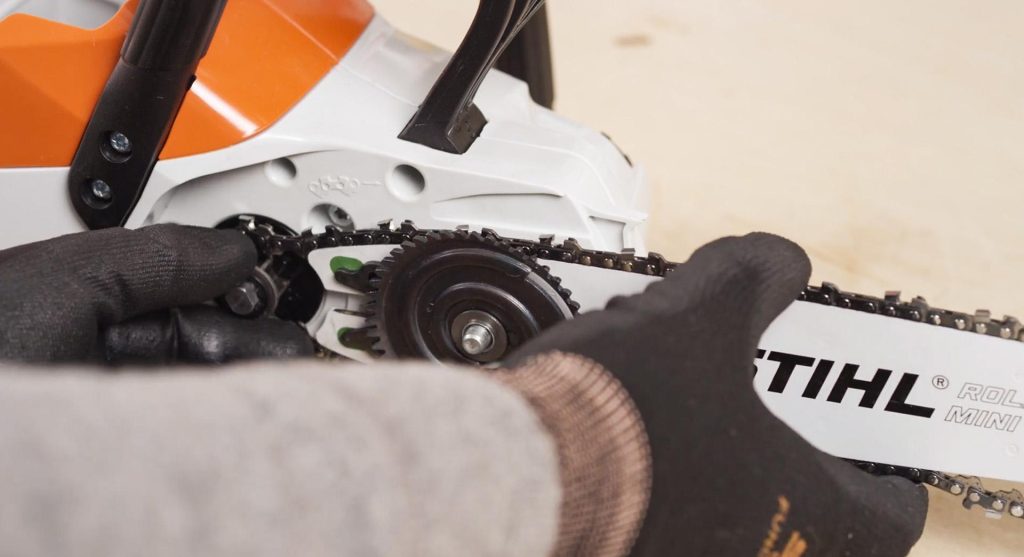
Lift the chain off the bar and sprocket
Remove and clean the guide bar
Installing the New Chainsaw Chain
3. Install the New Chain
Place the chain around the sprocket
Fit it into the guide bar groove
*Ensure the cutting teeth face forward on the top of the bar*
4. Reattach the Side Cover
Align the guide bar flush with the body of the chainsaw
Replace the cover and hand tighten nuts
Ensure the bar nuts are not binding
Check the chain moves smoothly around the guide bar - if not, remove side cover and check the chain is mounted correctly.
5. Adjust Chain Tension
Lift guide bar nose
Tighten until the chain is snug at the bottom of guide bar
Ensure nose does not drop and no chain sag under the bar
Check chain tension
The chain should have a gap of 1-2mm from the guide bar when pulled
The bottom of the chain tooth should not exceed the bottom of the guide bar when pulled
6. Confirm rotation
Pull the chain toward the nose of the guide bar
Confirm the chain rotates freely on the guide bar
6. Fully Tighten the Nuts
Once the tension is correct, secure all nuts
How Tight Should a Chainsaw Chain Be?
A properly tensioned chain:
Snaps back when pulled
Chain driver cannot be pulled past the bottom of the guide bar at the center point
Learning how to change a chainsaw chain is a simple but critical skill. It improves cutting performance, safety, and extends the life of your equipment.
For Edmonton users, combining DIY maintenance with support from a trusted STIHL dealer or Husqvarna dealer ensures the best results.
Found a better price somewhere else? Come see us in-store and let our team show you how we can beat it. Our knowledgeable staff is ready to help you get the best deal and answer any questions you have. Don't settle - get more value at Timberland Supply.